


Group V and B is a major player in beverage retail and distribution in France, with multi-site operations and teams covering Finance, IT, Marketing, Supply Chain, Product, HR, Customer Service and Sales. The adoption of Asana was led by Managing Director, Antoine Porcher, and structured around internal experts and champions to ensure effective uptake at all levels.
The challenge: Fragmented workflows and lack of visibility
Before Asana, the group faced several operational difficulties:
- Manual and fragmented processes between services, slowing down coordination and limiting efficiency.
- Manual monitoring of files and low traceability, increasing the risk of delays and errors.
- Workflows limited to the scope of a service, slowing down inter-service collaboration and not ensuring quality and efficiency.
The main objective was to improve coordination between services, standardize workflows, optimize individual organization and raise the overall quality of service.
Solution & Strategy: Governance and training for successful adoption
i.DO supported V and B to implement a structured adoption of Asana, combining governance, workflow optimization and training:
VandB’s internal approach:
- Analysis of existing practices and identification of critical use cases.
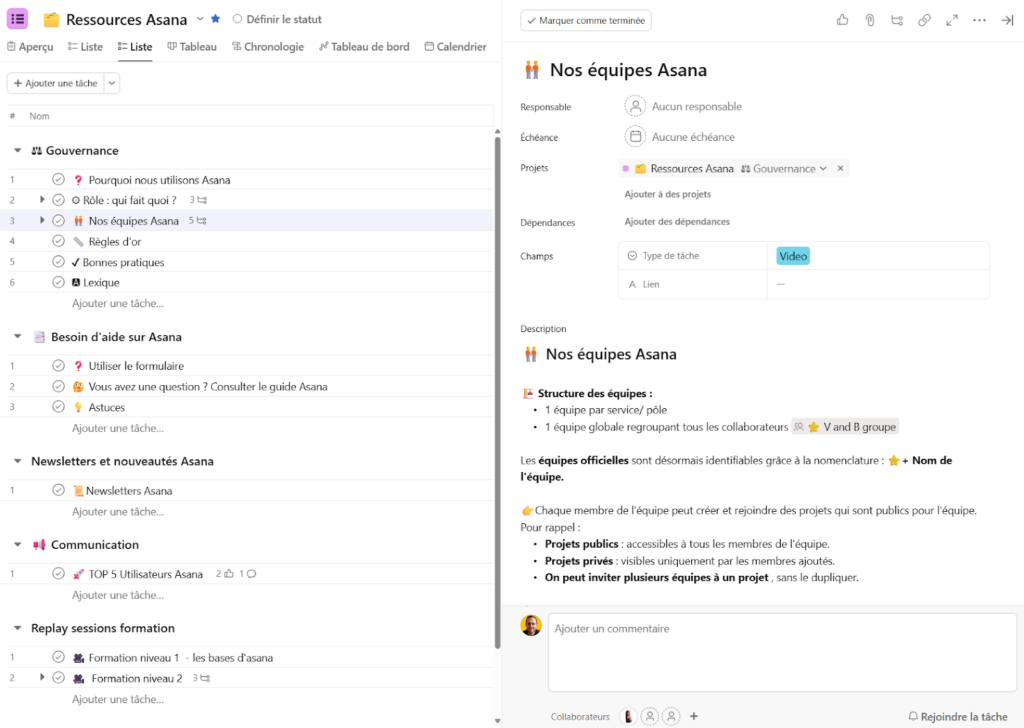
- Setting up internal experts and creation of a governance committee Asana.
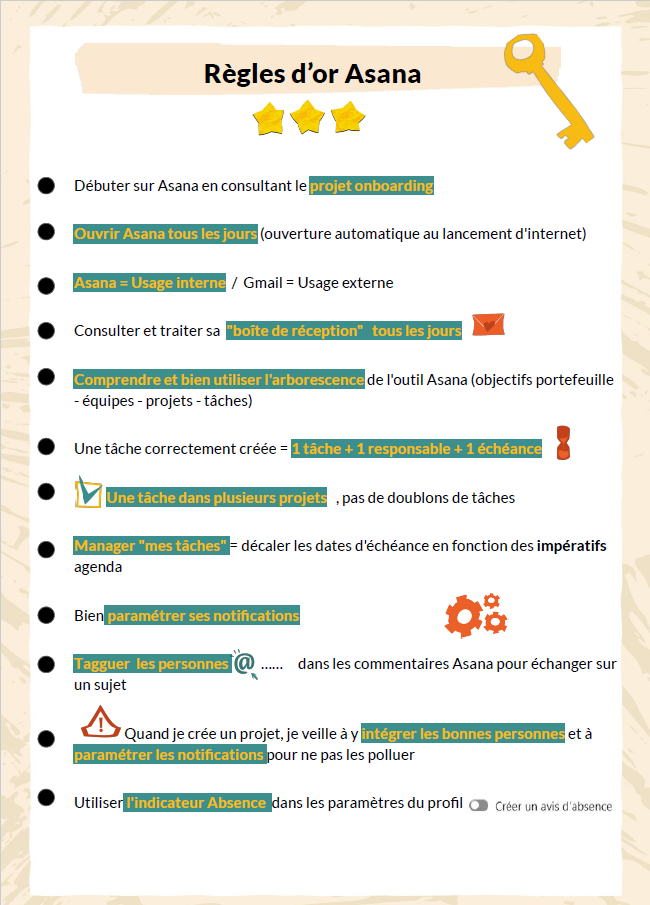
- Codification of the “golden rules” for standardized use.
Role of i.DO:
- Structured training at two levels for champions and end users.
- Committee support to define best practices and monitor adoption.
- Support in the implementation and optimization of standardized workflows in all services.
Key features and integrations:
- Standardized assignment tasks and project monitoring.
- Centralized collaboration and visibility for all teams.
- Ongoing supervision and support via the Asana committee and internal champions.
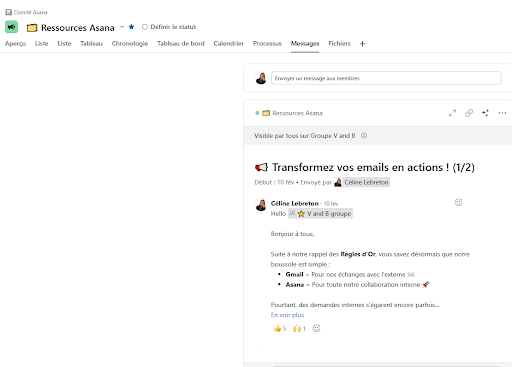
Example: a communication channel created directly in Asana and run by the Asana Committee to share best practices:
Example: The Objective functionality to integrate and share the company project and the monitoring of roadmaps by department:
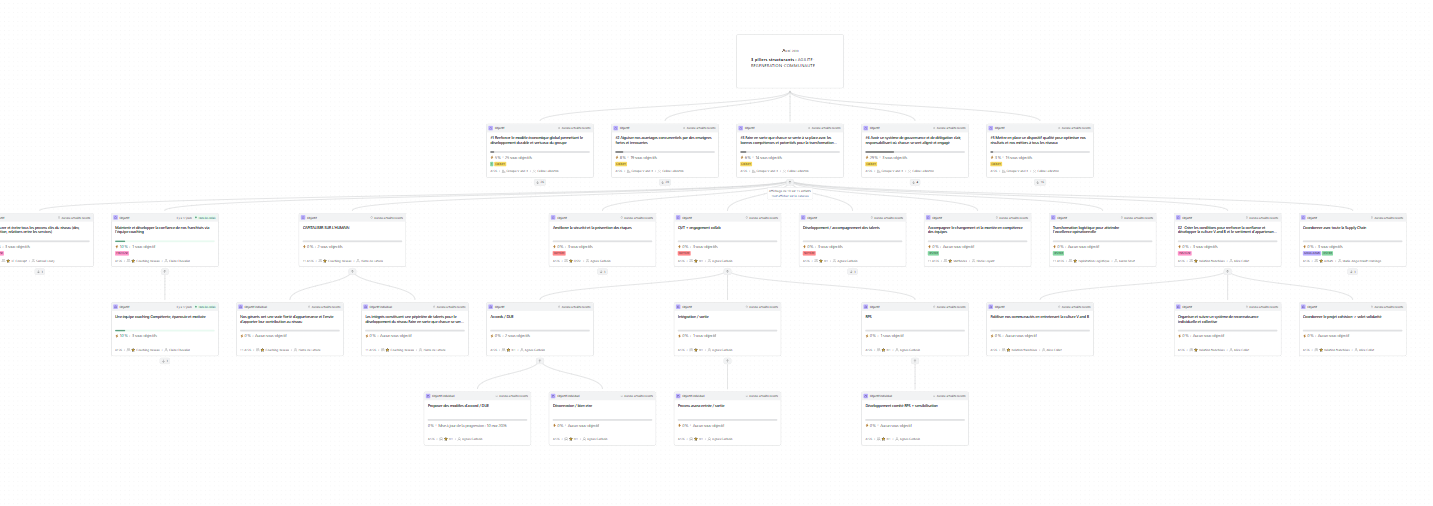
Example: Monitoring company performance indicators for monitoring from Reports
The adoption project has lasted 8 months, including training, optimization of workflows and establishment of the committee.
“i.DO allowed us to transform a difficult adoption into a structuring and exciting project for the entire company.” — Celine Lebreton
Results
The impact was immediate and visible:
- Team commitment: After the training, employees were more confident and the tool was adopted uniformly.
- Collaboration and visibility: Standardized workflows and centralized projects have improved communication and coordination between departments, providing managers and teams with better visibility.
- Operational efficiency: Reducing manual tracking and scattered communications freed up time for higher value-added tasks.
- Governance and scalability: The Asana committee and the golden rules ensure consistent adoption and sustainable practices for the future.
Future vision: AI at the service of manufacturing productivity
The integration of ASANA with the V and B teams with which I interact has primarily enabled different actions:
- A new structuring of our working methods and standardization of working practices. We have set up numerous portfolios and joint projects with different collaborators;
- Better interaction between different services with smoother and more centralized communication. We find information more easily based on different topics, especially in the absence of a collaborator;
- A better overview of the monitoring of daily tasks or not and therefore efficiency in productivity.
Following the various training sessions in small groups with I.Do, which were very rich, we were able to share best practices together. We were able to discuss our business issues to best adapt to our different services.
The training allowed us to acquire additional skills that we were able to share with the rest of our teams, each at our own level, depending on the people who are more or less advanced in the use of ASANA. The spider web effect allows knowledge to be passed on to everyone.
I also feel enthusiasm from everyone because as an ASANA representative, I am contacted by different departments who are looking for new structures via ASANA for better efficiency and management of their tasks.
Even if new habits still need to be put in place, ASANA remains a practical tool in our daily work thanks to the centralization and structuring of information.
Marie-Ange Brault Domingo, Administrative Purchasing Manager
—
Since I have been at V AND B, the HR team has worked a lot with Asana, but this has been considerably strengthened since the IDO training last June.
Personally, Asana has become my daily dashboard. It allows me to secure my recurring tasks so that nothing is missed, and to manage all of my training projects with a clear vision of deadlines and deliverables. It even allows me to achieve some of my training indicators.
At the HR department level, Asana is an essential tool for centralizing our exchanges. We use it to monitor all our meetings and all our cross-functional projects. Each team member has access to the same level of information in real time, and we interact directly within tasks, which significantly reduces the volume of internal emails/chats. Speaking of emails, we have connected Asana to our respective mailboxes, which allows us to filter emails and redirect them to the right person in the form of a task. It’s very practical!
Finally, what makes our current use strong is that we have gone beyond simple “project management”. Asana is now a communication tool thanks to the use of forms (HR requests, PSR reporting, information sheets for new employees). And this is only the beginning, because we still have many aspects of Asana that we do not yet fully exploit (AI, creation of indicators, etc.).